
Discovering the Otherworldly Wonders of Tatacoa Desert: A Journey Through Colombia’s Hidden Gem
Tatacoa Desert, located in the Huila Department of Colombia, is a hidden gem that often goes unnoticed by tourists. With its unique landscapes, rich
Tatacoa Desert, located in the Huila Department of Colombia, is a hidden gem that often goes unnoticed by tourists. With its unique landscapes, rich biodiversity, and fascinating history, Tatacoa Desert offers a truly unforgettable experience for those who venture off the beaten path. In this article, we will uncover the mysteries of Tatacoa Desert, explore its flora and fauna, delve into the wonders of stargazing, trek through its rugged terrain, and discover the cultural significance of the indigenous communities that call this desert home.
Key Takeaways
- Tatacoa Desert is a hidden gem in Colombia that offers a unique and diverse experience for travelers.
- The desert is a journey through time, with geological formations dating back millions of years.
- The flora and fauna of Tatacoa Desert are a natural wonder, with over 200 species of birds and unique plant life.
- Stargazing in Tatacoa Desert is a celestial experience, with clear skies and minimal light pollution.
- The colorful landscapes of Tatacoa Desert make it a photographer’s dream, with vibrant hues and unique rock formations.
Uncovering the Mysteries of Tatacoa Desert
Tatacoa Desert has a rich history that dates back millions of years. The desert was once covered by a vast ocean, and as the water receded, it left behind a treasure trove of fossils and dinosaur remains. Paleontologists have discovered numerous fossils in the area, including those of ancient marine reptiles and dinosaurs. These findings have provided valuable insights into the prehistoric world and have made Tatacoa Desert an important site for scientific research.
One of the most striking features of Tatacoa Desert is its unique rock formations. These formations were created over millions of years through erosion caused by wind and water. The desert is divided into two main regions: the red desert, characterized by its vibrant red and orange hues, and the gray desert, known for its towering gray cliffs and canyons. These rock formations are not only visually stunning but also provide a glimpse into the geological history of the region.
The Unique Flora and Fauna of Tatacoa Desert
Despite its arid conditions, Tatacoa Desert is home to a surprising variety of plant and animal species. The desert is dotted with different types of cacti, which have adapted to survive in the harsh environment. These cacti come in various shapes and sizes, ranging from small round globes to tall, columnar forms. Some of the cacti even produce beautiful flowers, adding a splash of color to the otherwise barren landscape.
Tatacoa Desert is also a haven for birdwatchers and reptile enthusiasts. The desert is home to over 100 species of birds, including the endemic Tatacoa spinetail and the endangered Apical Flycatcher. Reptiles such as lizards, snakes, and turtles can also be found in the desert, with the green iguana being one of the most iconic species. The unique flora and fauna of Tatacoa Desert highlight the importance of preserving this fragile ecosystem.
Stargazing in Tatacoa Desert
| Metrics | Values |
|---|---|
| Number of stargazing tours | 10 per week |
| Number of telescopes available | 5 |
| Percentage of clear nights | 90% |
| Number of constellations visible | 20 |
| Number of shooting stars per hour | 10 |
One of the highlights of visiting Tatacoa Desert is the opportunity to stargaze in a pristine environment. With its remote location and minimal light pollution, the desert offers ideal conditions for observing the night sky. The clear, dark skies provide a canvas for stargazers to marvel at the wonders of the universe.
Tatacoa Desert is located near the equator, making it an excellent location for observing both northern and southern hemisphere constellations. Visitors can spot familiar constellations such as Orion, Ursa Major, and Cassiopeia, as well as southern hemisphere favorites like the Southern Cross and Centaurus. The experience of sleeping under the stars in Tatacoa Desert is truly magical and allows visitors to connect with nature on a deeper level.
The Colorful Landscapes of Tatacoa Desert
Tatacoa Desert is known for its vibrant colors, especially during sunrise and sunset. As the sun rises or sets over the desert, it casts a warm glow on the landscape, creating a breathtaking display of colors. The red and orange hues of the red desert become even more intense, while the gray cliffs and canyons of the gray desert take on a golden hue.
The desert is also home to different landscapes, each with its own unique beauty. The red desert is characterized by its sandy plains and towering cliffs, while the gray desert features rugged canyons and eroded rock formations. The contrast between these landscapes creates a visually stunning backdrop for photography enthusiasts.
Trekking Through Tatacoa Desert
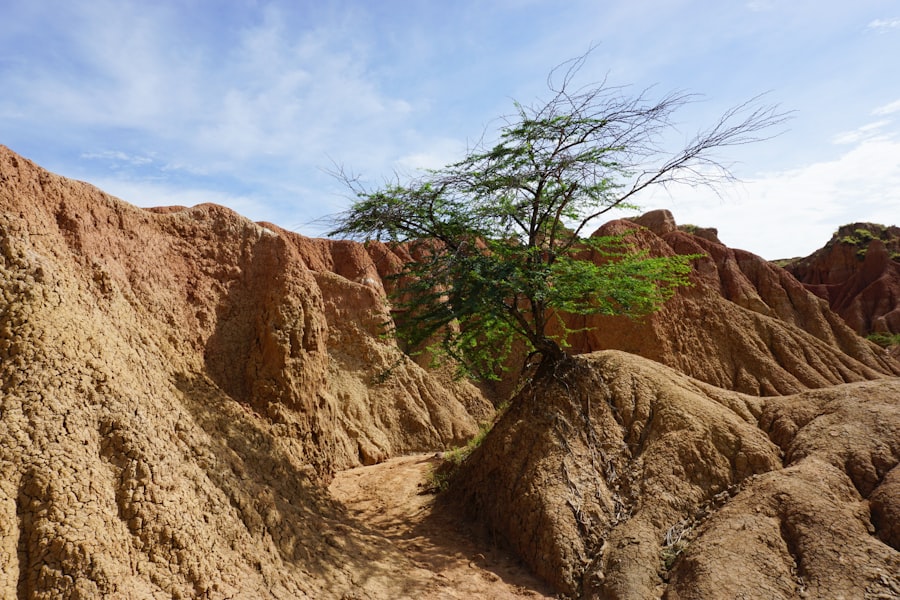
For those who enjoy outdoor adventures, Tatacoa Desert offers a variety of hiking trails that allow visitors to explore its rugged terrain. The desert is crisscrossed with trails of varying difficulty, ranging from easy walks to more challenging hikes. These trails take visitors through canyons, across sandy plains, and up rocky hills, providing a unique perspective of the desert’s landscapes.
Trekking in Tatacoa Desert can be both challenging and rewarding. The arid conditions and high temperatures require hikers to come prepared with plenty of water, sunscreen, and appropriate footwear. However, the stunning views and sense of accomplishment make the effort worthwhile. Safety should always be a priority when hiking in Tatacoa Desert, and it is advisable to hike with a guide who is familiar with the area.
Exploring the Caves of Tatacoa Desert
Tatacoa Desert is home to several caves that offer a glimpse into the region’s geological history. These caves were formed through a combination of erosion and the dissolution of limestone over millions of years. Some of the caves are easily accessible, while others require more advanced spelunking skills.
The caves of Tatacoa Desert have both historical and cultural significance. They were once used as shelters by indigenous communities and later served as hiding places for outlaws during the colonial period. Exploring these caves provides a unique opportunity to learn about the region’s past and appreciate its natural wonders.
The Indigenous Communities of Tatacoa Desert
Tatacoa Desert is not only a place of natural beauty but also a home to several indigenous communities. These communities have a deep connection to the land and consider Tatacoa Desert to be sacred. They have preserved their traditional way of life and continue to practice their customs and rituals.
When visiting indigenous communities in Tatacoa Desert, it is important to respect their culture and traditions. It is advisable to seek permission before entering their territories and to engage with them in a respectful and responsible manner. Supporting local artisans by purchasing their crafts is also a great way to contribute to the economic well-being of these communities.
Relaxing in Tatacoa Desert
Tatacoa Desert offers a peaceful retreat from the hustle and bustle of city life. With its tranquil atmosphere and stunning landscapes, the desert provides the perfect setting for relaxation and rejuvenation. Disconnecting from technology and immersing oneself in nature can have numerous benefits for mental and physical well-being.
Visitors can engage in various relaxation activities in Tatacoa Desert, such as yoga, meditation, or simply enjoying the silence and solitude of the desert. Taking time to appreciate the beauty of the surroundings and being present in the moment can help reduce stress and promote a sense of inner peace.
Sustainable Tourism in Tatacoa Desert
As more people discover the beauty of Tatacoa Desert, it is important to ensure that tourism is conducted in a sustainable manner. Sustainable tourism practices not only help preserve the environment but also support local communities and their livelihoods.
Some sustainable tourism practices in Tatacoa Desert include minimizing waste, conserving water, supporting local businesses, and respecting the cultural traditions of indigenous communities. Visitors can also contribute to sustainable tourism by participating in community-based initiatives, such as volunteering or supporting conservation projects.
Tatacoa Desert is a hidden gem in Colombia that offers a wide range of experiences for nature lovers, adventure seekers, and those looking for a peaceful retreat. From uncovering the mysteries of its prehistoric past to exploring its unique flora and fauna, Tatacoa Desert has something to offer for everyone. By practicing sustainable tourism and supporting local communities, visitors can help preserve this fragile ecosystem and ensure that future generations can continue to enjoy the wonders of Tatacoa Desert. So, pack your bags and embark on an unforgettable journey to this hidden gem in Colombia.
If you’re fascinated by the unique landscapes of Tatacoa Desert, you might also be interested in learning about the challenges faced by startups. In a thought-provoking article titled “Why Startups Fail: 11 Mistakes Founders Keep Making,” Nextep Funding explores the common pitfalls that can lead to the downfall of entrepreneurial ventures. From poor market research to lack of scalability, this article provides valuable insights for aspiring business owners. Check it out here and discover how to avoid these mistakes and increase your chances of success.
FAQs
What is Tatacoa Desert?
Tatacoa Desert is a semi-arid region located in the Huila department of Colombia. It covers an area of approximately 330 square kilometers.
What is the climate like in Tatacoa Desert?
The climate in Tatacoa Desert is hot and dry, with temperatures ranging from 22°C to 42°C. The region receives very little rainfall, with an average of only 100-200mm per year.
What kind of flora and fauna can be found in Tatacoa Desert?
Tatacoa Desert is home to a variety of cacti, succulents, and other desert plants. It is also home to a number of animal species, including lizards, snakes, scorpions, and birds.
What are some popular activities to do in Tatacoa Desert?
Some popular activities in Tatacoa Desert include stargazing, hiking, and visiting the various geological formations and canyons in the region.
Is Tatacoa Desert safe for tourists?
Yes, Tatacoa Desert is generally considered safe for tourists. However, visitors should take precautions to protect themselves from the sun and heat, as well as from any potentially dangerous wildlife.
How do I get to Tatacoa Desert?
Tatacoa Desert is located approximately 6 hours by bus from Bogotá, the capital of Colombia. Visitors can also fly into the nearby city of Neiva and take a taxi or bus to the desert.